Stop
Stay a little distance away. Do not touch or pick up the bumblebee.
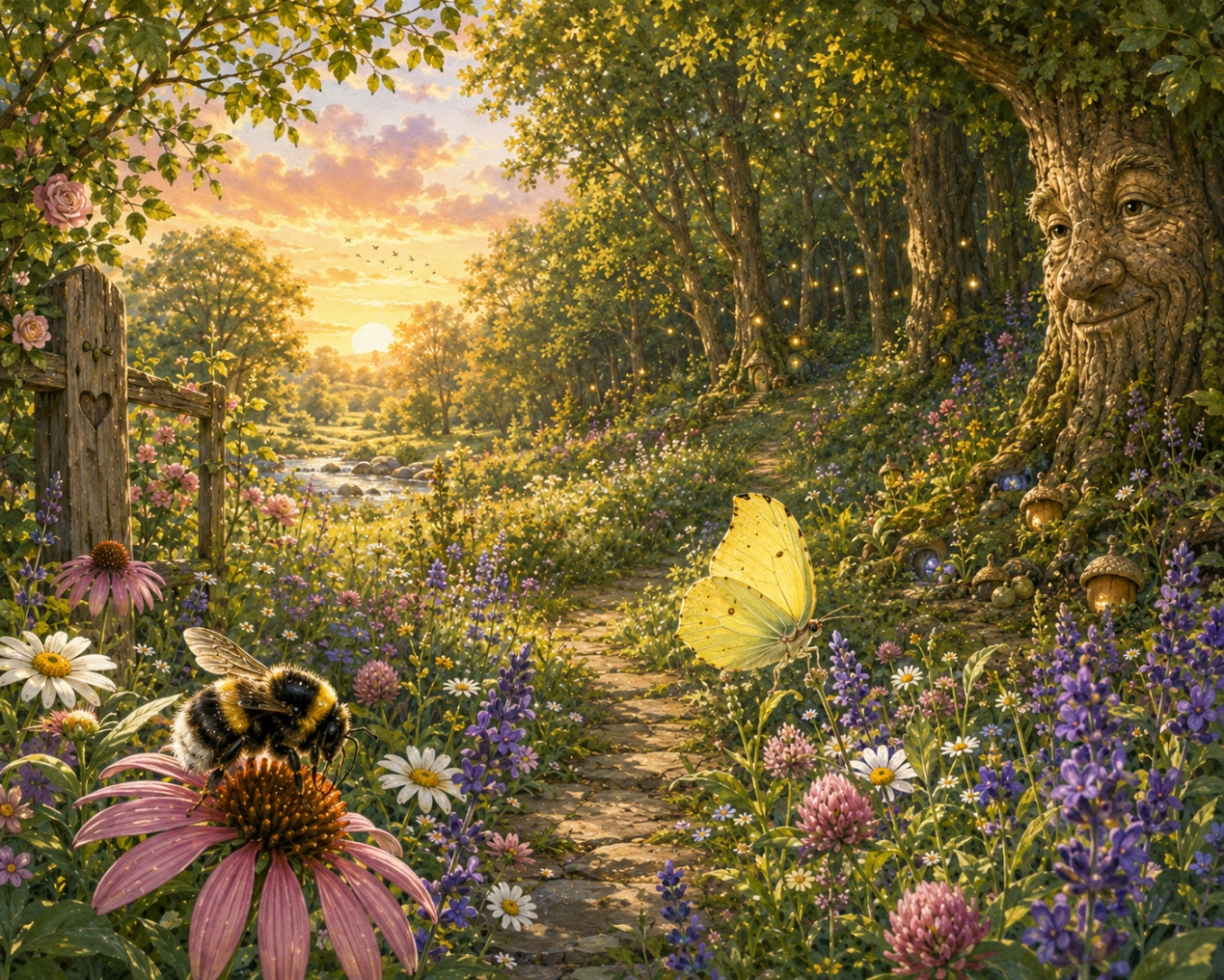
A lesson carried home from Fairy Glen
A still bumblebee is not always a bumblebee in trouble. She may simply be resting.
What should we do?For Little Keepers and their grown-ups
These are the first three things to remember whenever you find a bumblebee sitting still.
Stay a little distance away. Do not touch or pick up the bumblebee.
Is she near flowers? Is she safe from feet, wheels and curious pets?
Watch quietly with your grown-up. A resting bumblebee may simply need time.
Sometimes the kindest help is simply waiting nearby and letting a wild creature choose what happens next.
For grown-ups
Bumblebees naturally rest. Newly emerged queens can remain on the ground for around 30 minutes and sometimes up to 45 minutes. Begin by watching from a little distance.
Leave her where she is. Keep children and pets back, notice any nearby flowers and check again later.
If it is safe, a grown-up can gently move her a very short distance to a sheltered place or a nearby bee-friendly flower. Do not take her home.
If bee-friendly flowers are nearby, a grown-up may gently place her beside one and then give her time and space.
Only as a last resort, offer one or two drops of a 50:50 mixture of white sugar and water on a spoon. Never use honey or brown sugar. This is a one-off emergency boost, not food to leave out.
The help that lasts
The best support is a succession of nectar- and pollen-rich flowers from spring into autumn. Even a pot or window box can become a useful stopping place.
A note about water
Bumblebees generally get the water they need from nectar. A shallow container with pebbles may be used by honeybees, flies and other insects, but it is not a substitute for healthy flowering plants.
This page follows current advice from the Bumblebee Conservation Trust. Their guidance explains why rest is normal, when moving a vulnerable bee may be appropriate and why sugar water should only ever be a last resort.